Showing posts with label green resource. Show all posts

Monday, June 25, 2012

I am crafty: Altoids tin repurposing.

Perhaps you can blame my mother for my love of Altoids mints. She gave us a tin in our stockings each Christmas. I savored those mints, striving to stretch my supply until the following Christmas. When I was old enough and had spending money of my own, I invariably bought Altoids. I've tried just about all the flavors and varieties (my standard favorite is Wintergreen).

However. I am also a packrat, and have thrown away few of the containers I have collected over the years. Okay, I've thrown away plenty, but I've also saved plenty. They're just such useful little things!

One of my favorite uses for old Altoid tins is the mini kit. Sometimes I just toss supplies into an empty tin and call it good; a few I've labeled with Sharpie. But I'm an adult now, so I really ought to make nicer looking kits.

Here are two uses for an Altoid tin: a mini first aid kit and a business card holder.

I have a separate container for my most commonly-needed OTC meds (namely sudafed and ibprofen or, while pregnant, tylenol), but I do also carry in my purse a stash of bandaids (mostly for shoe blisters) and, ah, gas relief medication.

I used to carry these items in a plastic baggie, but recently the bag ripped and I ended up with smooshed and torn bandaids all over the bottom of my purse. The solution? This nifty Altoid-tin-turned-first-aid-kit.

Since I also have some business cards for my Real Job but don't have a paycheck that would fund the purchase of a thirty-dollar Fancy Business Card Holder, I decided to use an Altoid tin for that purpose, too.

First, the materials:

The white paper is just spare scrapbook paper; for the red
cross I actually used an envelope from Target rather than
any fancy sort of paper.
  • an Altoid or similar tin for each use
  • paper for decorating the outside of your tin
  • Mod-Podge (or thin out some white glue with water)
  • brush for applying Mod-Podge
Wipe out the inside of your tin(s) with a damp cloth. It may still smell minty fresh, but you probably don't want suspicious white powder all over your business cards (or bandaids, for that matter).

Trace the top of the tin onto paper.

Make sure to trace onto the "back" side of your paper, if
it has sides.

Traced.
Cut the paper to size.

Repeat steps 2. and 3. if you want to cover the bottom of your tin as well.

Apply a layer of Mod-Podge to the top (bottom) of your tin. Be generous, but not so generous that excess will ooze down the sides and glue your tin shut when you press the paper on.


Press your paper to the Mod-Podged top (bottom) of the tin.

It should line up pretty evenly; if not, trim with scissors or
an exacto knife.
If you want any other decorations, draw and cut them out. First trace an outline of your tin onto the paper you plan to use so you can ensure that your decoration will fit.

Outline.

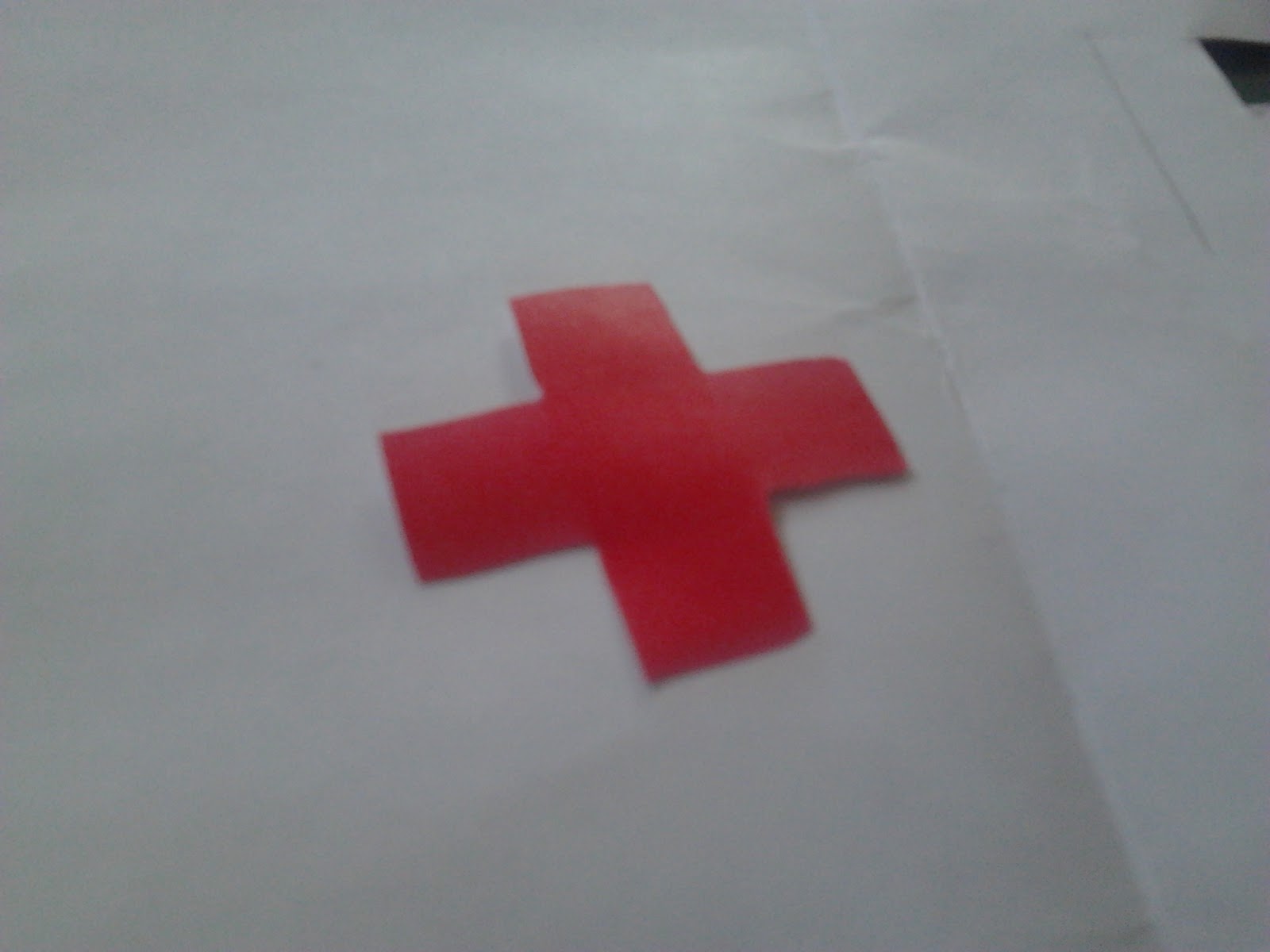
To do a red cross for a first aid kit, draw a cross onto the back of some red paper. Each line of my cross is 1/2" long, if that makes sense. Use a ruler to keep it straight!

Remember again to draw on the back side of your paper.
You can see how many times I messed up the poor cross.

Cut out the cross/other design.

Cut out and flipped over.

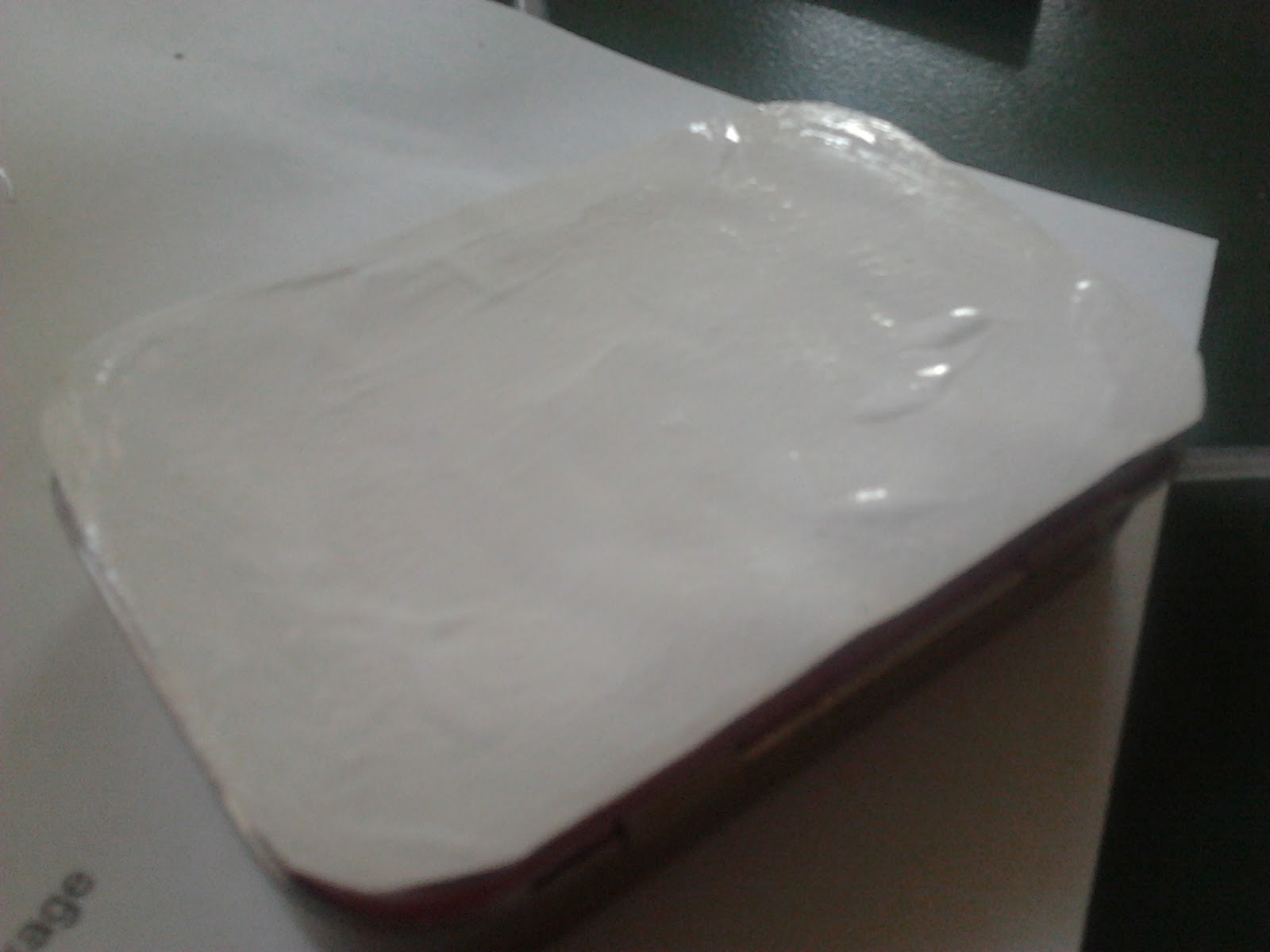
Apply a layer of Mod-Podge to the top of the paper on your tin. Feel free to do this as thick or thin as you like--a thick layer will provide a more textured finished product, while a thin layer will be sleek.

You do want your paper to get pretty well soaked.
Apply your cross or other decoration.

Position it how you want it now.
Apply more Mod-Podge on top. Don't worry--it will dry clear, I promise! You want to make sure the entire papered surface is coated in at least a thin layer. Once hardened, it will protect your paper from tearing or light water damage (use outdoor, waterproof Mod-Podge if this is something you intend to get wet).

White now, clear later. Promise.
Allow to dry. Depending on climate and how thick you layered the Mod-Podge, this will take 30 minutes to several hours.

Still not quite dry, but almost.

Fill your finished tin with your supplies!

Secret bandaid tin!

For the business card version, I simply trimmed the corners of the business card since the tin has rounded edges,

Chic?
then applied with Mod-Podge as described above. After I did this, I discovered that I would have to trim the corners off all my cards if I wanted them to fit inside the thing. So I did. Hopefully people I give them to will think it's spiffy rather than odd.

If you got Mod-Podge around the edge of your tin,
you may want to leave them open to dry so you don't glue them
closed on accident.
Ta-da! Now I'm not exactly the first person to do this sort of thing to an Altoid tin; I'm not even the cleverest. But I do love them for storing things that would otherwise get beat up in my purse, and now everyone knows more-or-less what's inside--in a nicer way than if I had just labeled them with Sharpie. ;-)

For more tin repurposing ideas, check out The Art of Manliness's Twenty-Two Manly Uses for an Altoids Tin, Tested's fancy techie uses for Altoids tins, and Artists Helping Children's 15 Cool Crafts using Altoids tins.

Thursday, March 15, 2012

I am growing our food.

Some of it, anyway.

A few weekends ago I decided that, February or no February, this weird warm winter meant it was time to plant some things.

I've gone about things all backwards. Though I planted a bunch of cool-weather seeds outside, I have yet to start my indoor transplants--which should have been done in the middle of February, except that it was so nice out in the middle of February that I did all the outdoor stuff instead.

C'est la vie.

So! Without further ado, here's what's going on in the garden:

False advertising.
Let me start with this picture of the garden from last spring. Lovely, no? Let's pretend it still looks that way and that weeds didn't grow straight through the weedcloth under the rocks and that the dogs didn't chew through my irrigation hoses. Mmkay?

Layers of expansion.
A space about as big as the garden itself in front of the garden has been covered in cardboard, soil, compost, leaves, rabbit litter, and a big ol' black tarp. In the next month or so we'll fence it in, hopefully do the gravel path deal, and presto! doubled our "acreage."

Lots of crops do well in cooler weather and can tolerate cold temperatures and even a light frost. These include cabbage, kale, broccoli, lettuces, chard, peas, and carrots. Some, such as kale, even get a flavor-benefit if you let them get a bit frosty. Some of these do better when directly seeded (as opposed to being started as transplants) than others.

Chard seeds.
So far, I've planted three kinds of lettuce, five-color Swiss chard, one row of kale (it's recommended that you start this as transplants, but I figured it was worth a shot), carrots, and peas.

After about three weeks, here's how they're doing:

A row of Forellenschluss lettuce.

Baby chard.

Nascent kale.

Carrots (bottom center).

A pea plant.
I am thrilled that my pea plants are looking so lovely, as I've never tried growing them before.

All three kinds of lettuce are sprouting; the Forellenschluss seems to be doing the best so far.

The chard and the kale are growing encouragingly well.

Really the only disappointment is the carrots. Last year I planted ollllld carrot seed as an afterthought in a corner of the garden when I was getting impatient but it was too cold and wet to really plant anything out. They grew like gangbusters and Meg enjoyed the bounty for the next almost nine months:

Some were as big as she was.
This year, those two tiny tiny sprouts pictured above are it. After three weeks! And this was brand new seed. I'm disappointed, but I'm not sure what the problem is. My guesses are either not enough water or being planted in rabbit litter (last year I planted them directly in our very clay soil). The litter compacted when water more tightly than expected, and I wonder if the carrots are too small and weak to break free, or if maybe enough light isn't reaching them.

But since I used my entire packet of carrot seed (grumble), I'll have to buy more if I want to try again. So I'm hoping I just need to be patient.

And then there's these beauties:

Bad angle on those pictures; they look smaller than they are. But those are my two plots of garlic that I planted back in November. They've been growing all winter. At this point I can snip off some of the greens to use in cooking, and by the time the tops die down in, oh, July, I'll be re-stocked on delicious homegrown garlic. I used the last of it a few weeks ago and store garlic is just not the same.

I also have these little volunteer garlics growing:
They've sprung up from heads I must have missed harvesting last year. It's unlikely they will develop good quality bulbs, but the greens are good eating and I'll probably harvest them for the young garlic bulbs later this spring.

Do you keep a garden, vegetable, flower, or mineral (rock gardens totally count)? Do you have an outdoor space or do you do containers? What foods do you like to grow?

Thursday, March 8, 2012

The Roommate is a genius.

Do you have any green onions rotting in your vegetable crisper?

Do this with them instead.

Notice how it's gray and raining in the background of the picture?

It's cold, too. But I guess I can't complain after this insanely mild winter. And the garden is enjoying a nice soak.

Garden post coming soon, promise!

Thursday, January 26, 2012

I am cooking up a storm: Bacon and Egg Tarts

The DDH revolted against my healthy dinner plan on Tuesday, and we ended up with these.
Bacon and Egg Tarts
I mention this briefly in the recipe post, but I'll note at a bit more length here: This is, for all its seeming unhealthiness and whatever sort of vibe you get from something consisting entirely of bread, eggs, and bacon, a very local meal.

I made the bread myself, with wheat from a local farm and butter from a local dairy. The eggs came from one of the DDH's coworkers. The milk and bacon came from a dairy and farm in the area.

Only the cheese (and the other ingredients in the bread: sugar, salt, yeast) came from a store. Something has to give in our food budget, and we eat far too much cheese at this point in our life (nachos being our standby I-don't-feel-like-cooking meal), and the local cheese selections are so limited, that we still get Sam's Club cheese.

Given that Oklahoma is such an agricultural state, sometimes I'm surprised at how limited our local food opitons can be. We don't have a year-round farmer's market, for instance.

But the options are there.

We have an every-other-week online order food pickup in the winter, from which we get all that dairy and the eggs (usually; this is the first time we've had coworker-eggs) and bacon.

We have a local butcher/rancher from whom we get most of our meat.

And during the growing season we have several different markets from which I get all of our produce that I don't grow myself.

A lot of this food is more expensive than conventional supermarket versions (in-season produce often being the exception), though not necessarily more expensive than all-natural or organic supermarket versions. We eat less meat than when I bought it all at Sam's Club, and as I said, we still get our main cheese there because it's so expensive otherwise.

And while I firmly believe in the principles of supporting local businesses and responsible farming and ranching practices, I totally understand not being able to afford those things. I've been there. Trust me.

But there's usually something you can do, if those values are important to you.

Growing your own produce is cheap and possible even for most apartment dwellers.

Maybe you pick one item that matters the most--eggs, or milk, or meat--and make an effort to buy that one item locally.

It makes a difference.

And when you're able to make an entire meal and think, not only did I make this for my family with my own two hands, but I have met, personally, all of the people involved in producing this food--well, that's a wonderful feeling.

I know this comes across as a self-righteous or look-how-awesome-I-am feeling, but that's not what I mean. It's just a feeling of belonging to a community, of being an active participant in a system rather than a passive one, of taking charge of what is an integral part of all our lives: food.

We all have to eat. Let's make what we eat good, in as many senses of the word as we can.

Thursday, January 19, 2012

I am cooking up a storm: Caramel Corn

Are you already wondering what to make for dessert tonight?

Are you thinking, "I really can't justify making a dessert tonight because it's January and resolutions blah blah weight loss blah blah diet blah"?

Stop being silly and go make some caramel corn.

Thursday, November 10, 2011

I am going doggone green.

Linking up with Megan at SortaCrunchy and some other wonderful bloggers for "Your Green Resource."


"Going Green" is a marketing catchphrase applied to a broad spectrum of actions. You can "go green" by buying $20 bottles of "natural" cleaners or by using $1.50/gallon white vinegar. You can buy designer clothing made from organic cotton or "recycled" clothing from the thrift store. You can buy carbon credits to "offset" the effects of your transatlantic jet flight or ride your bike to work every day, and all of you can pat yourself on the back for "saving the planet." (Quotation mark abuse, much?)

Most of us, though, seem to take a common sense, flexible, and yes, frugal approach to this whole green lifestyle thing. And if you're "greening" your human life, it makes sense to green up your critter life while you're at it.
Bunnies are friends, not food.
Pets are not little people in furry suits. Each kind of animal has its own requirements and specifications. What is best for humans is not necessarily what is best for pets.

However! A lot of practices that are good for humans, like limiting your exposure to certain chemicals and eating real foods, are good for pets. I only own/have owned dogs and various small mammals (rabbits, rats, guinea pigs), so I only address their concerns here. I know nothing about cats, birds, or reptiles/amphibians, so feel free to add your own tips in the comments!

Going Doggone Green


Evaluate your pet's diet.

The most important factor in your pet's health is his diet. Now, if things like free-range and organic are important to you in human food, you can make them important in your pet food as well. But let me tell you something. Organic, free-range, etc. commercial pet foods are expensive as hell. Maybe that's not a big deal if you're Paris Hilton and her three-pound Chihuahua. But if you're an average middle-class family with an eighty-pound Labrador, you would need to take out a second mortgage to buy that kind of chow. If these sorts of considerations are non-negotiable for you, don't have a big carnivorous pet. Get a rabbit or a guinea pig or something.


Dogs:

I could write a whole post on dog food. There's a huge range of options, depending on how much time and money you want to invest, from feeding him BARF (Bones And Raw Food) to making your own dog food to using dehydrated dog food mixes to a whole range of commercial foods. I'll just say two things here:
  1. Changing your dog's food can fix some of his minor and even not-so-minor health problems. Stop feeding him corn and cardboard and start feeding him something made of meat and grains he's less likely to be allergic to. Sites like http://www.dogfoodanalysis.com/ give great in-depth reviews that help you evaluate foods based on the criteria that are important to you.
  2. Check out a feed store or local pet store for dog food and supplies, rather than the mega-chains like PetSmart. A lot of excellent food manufacturers won't sell to the big chains, and pet food especially is often cheaper at these stores.

Small Mammals:

My rabbit eats a plain pellet food made from timothy hay (I originally said this food was organic, but when I double-checked my new bag, I noticed it no longer says pesticide-free. I guess they changed it and I'll have to find a new one), timothy hay from the WalMart of the pet food world, Kaytee, and mostly-organic and/or homegrown veggies. I try to limit her pesticide exposure, but hay is freaking expensive. Small mammals should eat:
  1. A pellet food formulated for their species (you can't feed a rabbit guinea pig food and vice versa) and get lots of fresh fruits and veggies.
  2. Hay is important for many small mammals to aid in their digestive systems (fiber, y'know).
  3. Fruits and veggies. Check out a list of foods commonly toxic to your animal and those ok for it to eat; this will vary some. Guinea pigs are like furry garbage disposals and can pretty much eat any of your plant trimmings; rabbits are a little pickier.

Choose Pet Supplies Wisely

Stainless steel and ceramic/glass are best for pet dishes just as they are for human dishes. Besides whatever chemical/petroleum/BPA concerns you may have with plastic, plastic dishes harbor bacteria and mold, are harder to clean, wear out more quickly, and are more easily destroyed by anything that chews (Labradors, rabbits, toddlers, etc.). You can get stainless and ceramic bowls in all sorts of cute colors and designs, or you can buy ueber-cheap plain ones. Perhaps you even have some old people bowls or buckets lying around that will make excellent food and water receptacles for your pawed friends: recycling bonus!

For leashes and collars, I prefer leather. I guess if you are a veg*n type person, you maybe wouldn't. But leather is much easier on the hands than nylon (which, after all, is another plastic), looks nice, and wears well. Trust me, if you have a dog that pulls, your hands will appreciate a leather leash! Leashes, collars, and choke chains (the collars you use for walking most dogs; this will depend on your breed!) are all commonly available from Made in the USA manufacturers. There are also all kinds of recycled/reused/plant-based-type leashes and collars available, made out of everything from hemp to used tires. Go to a pet store and buy basically anything but the made-in-China nylon nonsense and you'll probably be okay.


Jayne and his Kong.
As for toys, you may remember the 2007 recalls of a bunch of Chinese-manufactured pet toys due to high levels of lead and other toxins found in the toys. Look for toys made in the USA just to be safe. You have two routes you can go with dog toys, depending on your dog's personality and/or jaw strength.

  1. You can look for toys made with sustainable or recycled materials.
  2. You can look for toys that will last for-freaking-ever regardless of what they're made of.
The Labrador owns a Kong Extreme and a Kong Extreme ball, which are rubber toys (made in the USA) that are well-nigh indestructable. Seriously, he can defuzz and crush a tennis ball in less than ninety seconds, but he has had this Kong for almost a year and there are no signs of wear. We don't buy fancy Kong stuff to stuff the Kong with; I just shove his normal treats and peanut butter in there. I like to stick it in the freezer overnight so it takes him longer to get it out. The Beagle doesn't like toys.


The rabbit has a knotty wood thing and also gets paper towel/toilet paper tubes to shred. She is quite the interior decorator and will build statues out of the stuff we give her.

Treats

There are possibly even more options for treats than there are for food!

Dogs:

I usually buy grain-free treats for the dogs that they get each morning and when I come home for lunch. Wellness makes some good ones that are reasonably priced at my local pet store. The dogs also usually get the innards from any whole bird I cook (bonus if it's still got the neck). Sometimes I'll buy them cheap meats for a treat, too: chicken necks, organ meats, etc.

Note: RAW poultry bones are fine for dogs. They are pliable and digestable. COOKED poultry bones should never be fed to your dog, as they can splinter and puncture his intestine.


Chewing is great for your dog's dental health, and of course you want to direct his chewing energy to something other than your couch and shoes! Those big "bone-shaped" rawhides that you see are not really a good idea, as the rawhide can become impacted in the dog's intestines and generally cause digestive issues. Instead, choose:
  1. Real bones are always good (and the dogs will love love love them); they're about the most "natural" option around--what do you think wild dogs eat?
  2. Our dogs enjoy the occasional pig's ear, but these can cause digestive issues as well. They should be reserved for an occasional treat, and if your dog has a bad...experience...don't give him one again.
  3. Bully sticks (aka bull's penises) are an excellent choice if you can afford them; they don't last very long if you have a determined chewer, though.
  4. The best thing I've found for the Labrador actually is an antler. Our local pet store sells elk antlers in various sizes. Because they're not hollow and marrow-filled like bones, they last longer (it usually takes him a week or two to work through a good one, as opposed to a day for a similarly-sized bone), and he loves them.
The Beagle doesn't really understand chewing and will pretty much only take something to make the Labrador jealous.


Small mammals:

Small mammals should receive pretty much exclusively fruits and vegetables as treats: they love them and they're good for them. The commercial bunny etc. treats sold in pet stores are filled with sugar and often other questionable ingredients. Find a list of toxic foods to avoid and have fun experimenting with everything else! Meg loves cilantro and apples, and also happily eats chard and other winter greens as well as carrots, pumpkin, and various herbs.

If you have ever owned a small mammal, you know that they will chew pretty much anything and everything. Make sure everything within mouth reach is nontoxic. Untreated wooden toys made out of a non-toxic wood, whether made for animals or humans, are excellent choices, as are cardboard tubes.


Supplements

If you have a dog with dry, flaky skin or who scratches a lot, try 1) switching him to a corn-free, soy-free food and 2) giving him fish oil. You can get special dog fish oil and liquid fish oil to squirt on his food or, honestly, depending on his size, you can give him the same fish oil capsules you take. Both Beagle and Labrador get one of these each morning; when we first got Labrador and he was having some skin issues, he got two a day. For reference, they weigh twenty-five and seventy-five pounds, respectively.

Labrador also has joint issues, and supplementing him with glucosamine has really helped. I do notice a difference in his movement if I stop giving it to him for awhile. He gets one tablet a day, same as I do. I put peanut butter on their pills and they eat them right up.

My rule for supplements: I find the similar product in the health aisle of my pet store and compare it to my human version. If they have roughly the same amount of the same active ingredient, I feed the dogs the much cheaper human version. I AM TOTALLY NOT A VET THOUGH, and you should consult yours before doing any such thing.


Cleaning the Animal

Dogs:

Frequent baths are not good for your dog's skin! He builds up a layer of oils that help protect him. Honestly, unless the dog rolls around in a dead skunk or something, you probably do not need to wash him more than once every two or three months. When you do, look for a gentle shampoo specifically for dogs (cat person warning: do NOT use dog shampoos on cats!). Their skin is completely different from humans' (has a different pH) and very sensitive.

Dogs, really, are sort of like babies: delicate and sensitive to all kinds of things, and they put everything in their mouths, so avoid essential oils. Diluted vinegar will work, as will heavily diluted castile soap. Otherwise, look for a gentle, unscented commercial product--dogs have a much more sensitive nose than humans, and that juicy shampoo that smells so delicious to you is overwhelming to him. If you have a homemade soap routine that you use, make sure to research all of the ingredients and their suitability for use on animals.


Small mammals:

Do not need to be bathed. It's actually bad for them and can lead to respiratory infections. Some animals have special requirements; chinchillas, for example, need to take dust baths in special volcanic rock powder. If your other small mammal somehow gets really dirty, wipe it off with a damp cloth and make sure to keep it warm until it is completely dry. Don't use soap. The animal will eat the soap residue when it washes itself and get sick! If you absolutely must, get a special small mammal or cat shampoo (NOT dog shampoo). In fifteen+ years of owning rabbits, both indoor and outdoor, I have never needed to give one a bath.

Cleaning the House:

Dogs and small mammals, like toddlers, explore the world through their mouths. They lick that carpet and chew on the couch and generally are closer to a lot of surfaces than adult humans. They'll appreciate it if you use natural cleaners in their areas. I use vinegar and baking soda to clean the rabbit cage; most of my household cleaners pretty much involve vinegar, also.

For pet messes, an enzyme cleaner such as Nature's Miracle will help break down the fats in the urine that a) make everything stink and b) tell the dog, hey! dude! this is a good place to pee! you should totally pee here!


Flea Treatment:

We do not treat the animals for fleas and ticks with Frontline or anything similar. This is one of those situations where an ounce of prevention is worth a pound of cure. Frequent vacuuming (seal and throw out the vacuum contents after every vacuum!) and bedding washing can nip an infestation in the bud. Dawn dish soap kills fleas just as effectively as any chemical-filled shampoo; wash the dog every week at the first sign of a flea until you haven't seen a flea for four weeks. Diatomaceous earth sprinkled at doorways and window sills will help keep fleas out naturally.


Miscellaneous:

I use aspen chips and pellets for the bunny cage so that I can compost her waste; it also makes excellent mulch. Bunny waste is AWESOME for your garden; dog/cat waste is NOT. Carnivore waste spreads diseases. Throw it out.

What are some of your favorite ways to go dog(or cat or rabbit or bird or lizard)gone green?


Disclaimer: I'm not a vet or in any way licensed to give animal advice. I've just owned (and showed) dogs forever and small mammals almost that long. ^_^ Consult an actual expert regarding your own animal and its needs.

Disclaimer two: Obviously, this post was mostly just an excuse to picspam you with Fotos of the animalz. ;-)

Thursday, October 27, 2011

I am sipping the fruits of my labor, and they taste like pumpkin spice.

So.

Guys.

Guess what?

It's fall! And do you know what fall means?

PUMPKIN SPICE FLAVORED EVERYTHING.


Seriously. Google image search "pumpkin spice."
There are pumpkin spice flavored Hershey's kisses.
There is pumpkin spice flavored BEER.
This, in my opinion, is the best of things. The only problem? As usual, money. Do you know how much pumpkin spice lattes cost at Starbucks? Even QuikTrip (the poor Tulsanite's Starbucks) has raised its drink prices. And as dearly as I love the pumpkin spice flavored froyo at Cherry Berry, thirty-nine cents per ounce adds up quick.

So what is a pumpkin spice loving cheapskate to do?

Make it herself.

Obviously.

Someone (my guess is Frugally Sustainable, and even if it wasn't, let me just say that Facebook-friending her has about septupled by OMG-want-to-do-that list) posted this recipe on Facebook. The DDH and I experimented this weekend, and I thought I'd share our version.

We made pumpkin-spice flavored coffee because we were actually out of coffee on Saturday (it was the only ingredient we were missing!), but I've been bringing the milk mixture in and putting it in my normal coffee at work and that tastes fine, too.

We made this in a pitcher and it probably makes about twelve servings, depending on how big your mug is. ;-) I've provided the thirded (is that a word?) recipe in parentheses in case you have food commitment issues/don't want to drink this every day for a week.


3 cups milk (1 cup)
1 can pumpkin puree (1/3 to 1/2 can)
1 teaspoon nutmeg (scant 1/2 teaspoon)
1 teaspoon cloves (scant 1/2 teaspoon)
1 teaspoon ground ginger (though wouldn't fresh ginger be yum!) (scant 1/2 teaspoon)
2 teaspoons cinnamon (scant 3/4 teaspoon)
3 teaspoons vanilla (1 teaspoon)
6 tablespoons brown sugar (though our housemate has lent us some agave nectar to try next time) (2 teaspoons)
generous shake of garam masala (1/3 generous shake ^_~)

I dumped all the ingredients in a pitcher and had at it with the immersion blender so that I could just stick the lid on the pitcher and store the extra. Otherwise, put everything in a blender and blend well, then pour into your chosen container.

Mix pumpkin mixture with coffee to taste (so me, I like it about half and half; the DDH likes a spoonful or two in a mug of black coffee). It's also nice if you warm it up before adding it to your coffee. Top with whipped cream (cream + sugar to taste (though you could do unsweetened for this, really) + vanilla to taste beaten in a metal bowl with a hand beater) and cinnamon.

The mixture will settle if you leave it sitting around, so shake or stir briskly before pouring that second cup. And the third.

Sadly, I had no cream to whip. It was delicious anyway.

Thursday, October 13, 2011

I am a laundromat.

Not really, actually.

I do laundry maybe once a month (a bonus of not having kids yet). The DDH does small loads more frequently because he has a limited number of work appropriate shirts and a lower tolerance for re-wearing clothing than I do (this is, admittedly, the man who was raised to use a bath towel only once before washing it. He gave up this habit when he realized that I, unlike his mother, was not going to wash a giant load of towels twice a week), but I usually do a big laundry party weekend for my clothes and the towels/rags/napkins/sheets roughly once a month.


The beagle likes to keep the laundry warm for me while I fold it.

This weekend, I suspect, has been nominated as The Laundry Weekend, and I noticed that my laundry detergent supply was running low. It's time to make more, and, while I'm at it, thought I'd share the recipe.

Because as it turns out, laundry detergent is so ridiculously simple, fast, and cheap to make that I do not understand why people buy commmercial detergents. Srsly guyz. Have you seen the price for a box of Tide these days? That is not in my budget. Plus, even the not-particularly-keen-on-green DDH has sensitivities to the chemicals in that stuff. So! Without further ado:

You need:

*Borax
TWENTY MULE TM BORAX

*Washing soda (this is not baking soda; it can be found on the laundry aisle of your grocery store and occasionally Walmart)

*Bar soap, such as Fels Naptha (laundry aisle) or Ivory (something plain, basically, is what you want, and white so it won't discolor your clothes)
*A food processor

*Something to store it in (I use the empty detergent bucket from the detergent I bought at Sam's Club before discovering this magical recipe)

Cut a bar or two of soap into chunks and process in the food processor until it is finely grated (I used to do this by hand until a friend told me she used her food processor--it's much safer for the fingers, heh).

Mix the grated soap with the Borax and washing soda in your container using a ratio of 2:1:1 soap: Borax: washing soda.

Use one Tablespoon for a full load of laundry. Less for smaller loads and, now that we have one of those energy-efficient washer things, I use a little less than a tablespoon for large loads, too.

THAT'S IT.

Seriously, the first time I made it and had to buy everything at once I think it came to less than $15 for a big thing of Borax, a big box of washing soda, and ten bars of Ivory soap. That lasted me a year and a half before I had to get more Borax and washing soda (I think I had to get more soap sooner). Admittedly, I already told you I don't do that much laundry. But call it twenty bucks for a year of two people's laundry is cheaper than commercial detergent any way you slice it, and with the food processor it takes less than ten minutes.

It works better than the cheapo stuff I was buying at Sam's before, and seems to work just as well as Tide or anything like that. In the winter when everything is colder, I use a little less and make sure the soap is really, really finely ground if I'm doing a cold-water load (which is most of them), because sometimes the soap wouldn't dissolve all the way and would leave little flakes on the clothes.

And! While we're on the topic, there's no need to use fabric softener, either. White vinegar does the job perfectly well. I pour some into the little fabric softener ball that came with my washing machine. This keeps all my clothes from being painfully stiff when I air dry them.

This site has some other detergent recipes, including liquid ones, if you're a die-hard liquid detergenter.

Try it! Let me know how it works.

Linked with Your Green Resource at SortaCrunchy.